
How to Choose the Right Garage Door Company in Kensington
Most homeowners in Kensington vet a garage door company the same way they’d vet a roofer or a painter: check the license, skim the reviews, compare the price. That approach works everywhere except here. Pennsylvania doesn’t license garage door technicians separately, so the person about to reset a torsion spring under hundreds of pounds of tension could have learned the job last week, and no review platform will flag it. The right question isn’t “are they licensed?” It’s “do they actually specialize in garage doors?”
This guide covers the four questions that separate real garage door specialists from general handymen who bought a spring kit. If you’d rather skip the homework and talk to someone now, call (833) 439-5277.
Key Takeaways
- A general contractor license tells you nothing about garage door competence; there’s no separate state credential for it in Pennsylvania.
- Four questions on the phone reveal more than a hundred five-star reviews.
- What’s on the technician’s truck says whether you called a specialist or a generalist.
- A “lifetime warranty” that excludes labor is mostly decoration.
- A higher rate from a specialist often lands you a smaller total bill than a lower hourly from a generalist.
Why doesn’t a contractor license prove a garage door company is qualified?
It doesn’t, because Pennsylvania doesn’t issue a garage door-specific license. A home improvement contractor registration covers a contractor’s business practices for home improvement work, but it says nothing about whether that person understands spring wire gauge, drum winding, or the difference between a torsion and an extension system. The registration is a baseline for doing business, not a seal of technical competence.
So what actually signals skill? Two things worth asking about:
- Manufacturer-authorized or factory-trained status. Brands like Amarr, Wayne Dalton, Craftsman, and Raynor publish training and service programs for the people who install and repair their products. A technician trained on your specific brand recognizes the door and opener on arrival instead of reverse-engineering it.
- Trade association membership. The International Door Association (IDA) is the trade body for this industry and offers installer and service technician certification. It’s not a state requirement, which is exactly why it tells you something: the company chose to invest in it.
Ask directly: “Are your technicians factory-trained on my door brand, and are they IDA-certified?” A specialist answers without flinching. A generalist changes the subject.
What four questions should you ask before booking a garage door company in Kensington?
These four cover the ground a license check can’t. The answers matter more than the reviews.
- “What brands do you service, and is my door one of them?” A specialist works across the major lines: LiftMaster, Chamberlain, Genie, Clopay, Amarr, Wayne Dalton, Craftsman, Raynor. A vague “we handle all makes” is a warning. Ask for two or three they know cold.
- “Do you do torsion and extension spring replacement yourselves?” Springs are the most dangerous job in this trade. A company that outsources springs, or hedges, isn’t a garage door company. It’s a dispatcher.
- “Do you service openers as well as doors?” Openers are a separate skill set from the door itself. If they only do doors, you’ll need a second call when the opener fails. A full-scope specialist covers the whole system, which means garage door opener repair doesn’t become someone else’s job.
- “Will you give me a written estimate before any work starts?” The right answer is an unqualified yes. A company that quotes over the phone without seeing the door, or refuses to put numbers in writing, is telling you how the invoice will go.
A deflecting or vague answer to any of these is your signal to keep calling. It’s not rudeness. It’s information.
What does a garage door company’s truck and parts tell you about how specialized they really are?
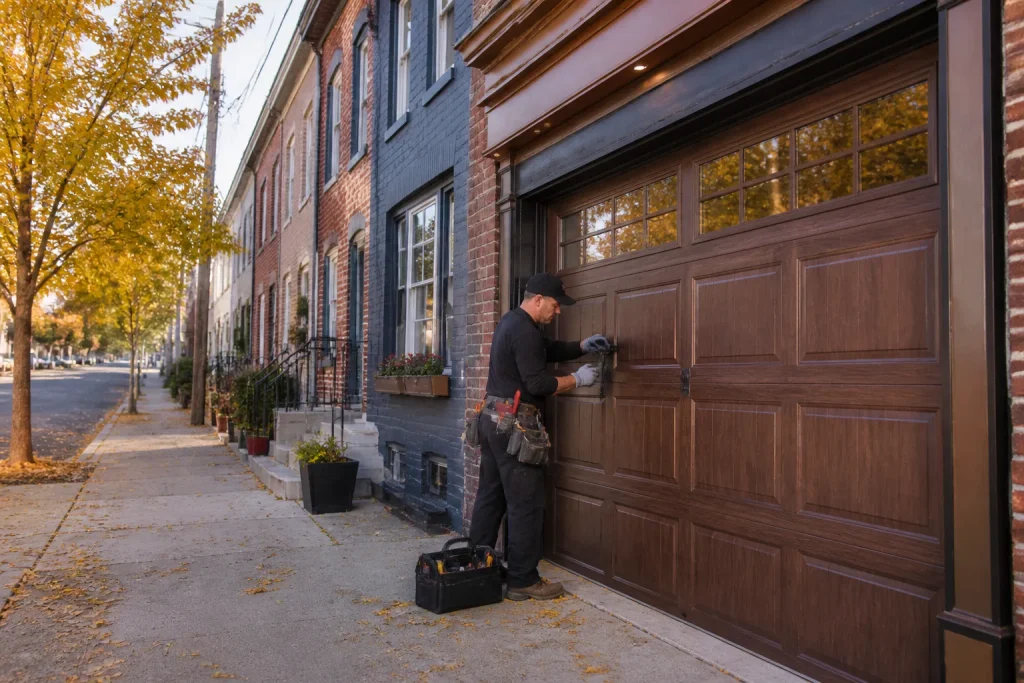
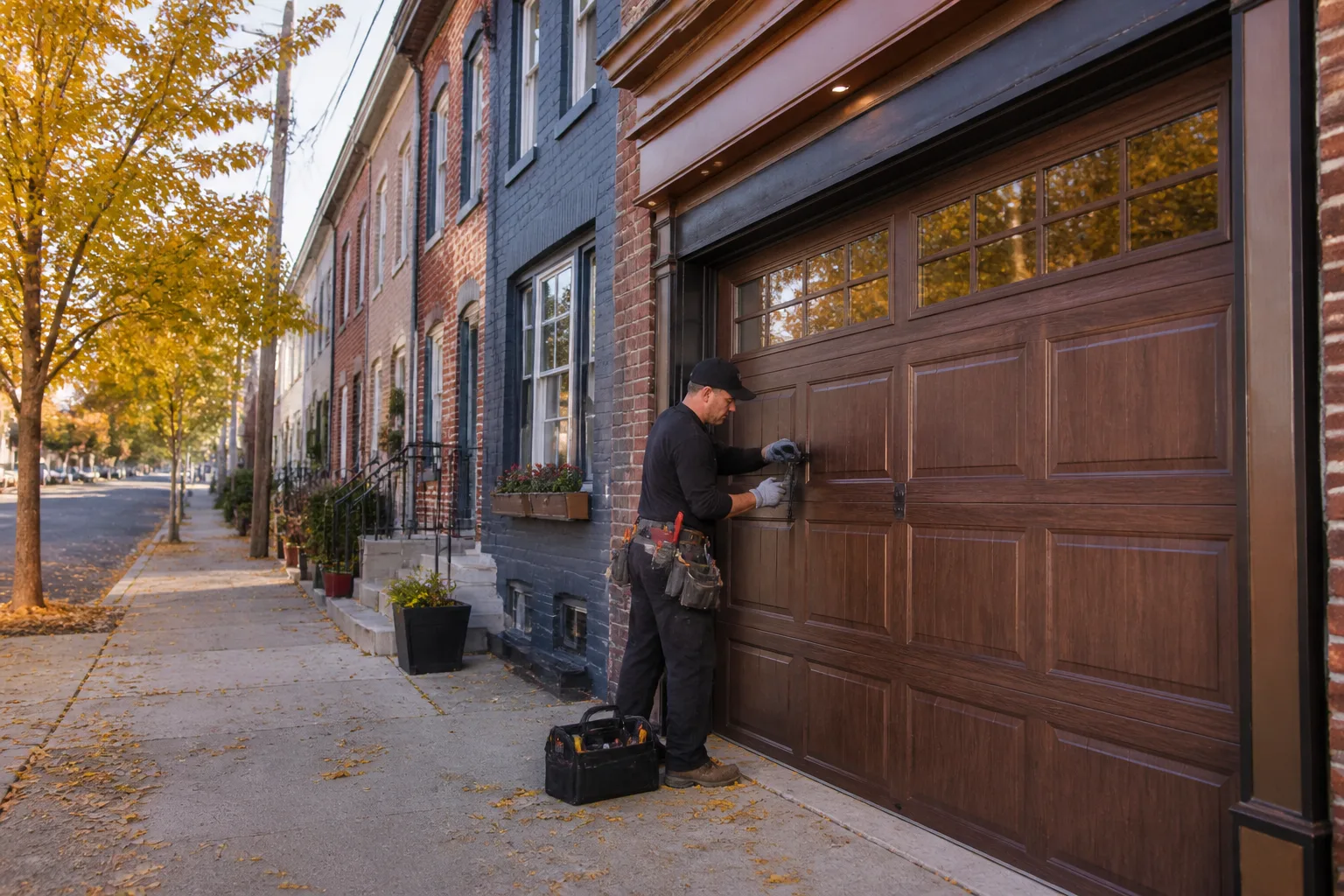
What shows up in the driveway is a decent proxy for what kind of company you hired. A dedicated garage door technician arrives knowing the door, and the common parts for it. A generalist arrives with a general toolkit and starts diagnosing from scratch, which is where the total cost climbs.
Look for a few things on arrival:
- Brand recognition on sight. A specialist looks at your door and identifies the make and the opener family without a manual. That’s ten minutes of diagnosis you don’t pay for twice.
- Job-specific parts on hand. Springs, cables, rollers, hinges, and opener components for common systems are the working stock of a door specialist. If every part is a “we’ll have to order it,” you’re looking at a return trip and a longer bill.
- Proper spring tools. Winding bars and the right hardware are what separate a safe spring replacement from a dangerous experiment. If they don’t have them, stop them.
A specialist is set up for one job and does it every day. A generalist is set up for everything and rarely does this one. That shows up on the truck, and later on the invoice.
What does a real garage door warranty actually cover, and which ones fall apart on inspection?
Warranty language is where a lot of garage door companies get creative. The words “lifetime warranty” sound great until you read what’s actually covered and what gets excluded. On a garage door, parts and labor are two separate warranties, and the labor is usually the expensive half.
A credible warranty covers both, in writing, with the terms spelled out:
- Parts coverage with a named duration for springs, hinges, rollers, and opener components.
- Labor coverage for the same window. A part covered for the life of the door but with labor excluded isn’t much of a warranty when the labor is the bulk of the bill.
- The exclusions in plain language. Normal wear, misuse, and a second company’s repair are the usual carve-outs. Fine. But if every possible failure is excluded, the warranty is decoration.
Ask “how long is the labor covered, and can I see the terms?” before you book. If the answer gets fuzzy, that’s the tell. On the safety side, note that a spring job is one you should never attempt yourself: the springs are under extreme tension and can cause serious injury. That’s a job for a trained technician, full stop.
Why does a specialist’s higher rate often produce a lower bill than a generalist’s lower rate?
Here’s the math most people miss when comparing garage door companies. The hourly rate on the front of the quote isn’t the number you pay. The total invoice is the rate times how long the job takes, and a specialist usually finishes in a fraction of the time. It’s not a fair fight.
Take a stuck or broken door that needs a spring replacement:
- The generalist quotes a lower hourly, then spends longer diagnosing which spring system you have, makes an extra trip for a part that wasn’t on the truck, and charges for both trips. The low rate gets multiplied by a longer clock.
- The specialist recognizes the door and opener on arrival, has the right springs on hand, and finishes in a single efficient visit. Higher rate, fewer hours, one visit.
The cheaper-looking hourly is a reflection of how much time the company expects to spend figuring out the job. On spring work, a slow technician isn’t just expensive. They’re handling one of the most dangerous components in a home, and experience is exactly what keeps that safe. If you’ve got garage door repair that’s gone beyond a quick fix, the specialized visit is usually the cheaper one in the end.
Same logic applies when it’s time for a replacement rather than a repair. A proper garage door installation is a measured job, ordered and scheduled to fit your opening; get the measure and written price first, and don’t rush it.
When should you call a pro instead of waiting or trying it yourself?
Some problems have room for patience. Others don’t. In Kensington, we see a lot of doors that got a little worse each month until they stopped moving entirely, which turns a small repair into a bigger one. The rule is simple: if the door is moving wrong, trying to force it or fix it yourself is how you make it worse.
Call a specialist when any of these show up:
- The door won’t close, or reverses on its own.
- The door is hanging crooked, binding, or dragging on one side.
- A spring is visibly broken, or you hear a sharp snap from inside the mechanism.
- The opener runs but the door doesn’t move, or the opener is making grinding or popping sounds.
- The door is off its track, or a cable has come loose.
A misaligned door or a failing spring is a real safety risk, and a falling door can hurt someone. Leave the spring work and the opener’s electrical side to a trained garage door technician. If you’d rather not DIY, we can help.
When to call a pro: the moment the door’s motion changes or the spring gives. Don’t wait for the morning to see if it “settles.” That’s usually when it gets expensive.
Related services in Kensington: we handle garage door repair, opener repair, spring replacement, and full installations. One call, one specialist, no second company.
The Bottom Line
The fastest way to pick the wrong garage door company in Kensington is to use general-contractor criteria. Licensing won’t tell you whether the technician understands your Amarr or Wayne Dalton door. Reviews won’t tell you whether they know torsion springs from extension springs. The four questions, the truck, the warranty terms, and the total-cost math will.
Ask about brand training and IDA certification. Confirm they do springs and openers themselves. Demand a written estimate before work starts, and read what the labor warranty actually covers. Then compare total cost, not the hourly. A specialist usually wins on both.
Garage Door Repair Kensington is a dedicated garage door specialist. We service LiftMaster, Chamberlain, Genie, Clopay, Amarr, Wayne Dalton, Craftsman, and Raynor. Our technicians have up to 10 years of experience. If you’re in Kensington and need help, we offer free estimates. Call (833) 439-5277. We answer 24/7. Fast dispatch from 7am to 7pm, Sunday through Friday.
Frequently Asked Questions
Ask four questions: which brands they service, whether they handle torsion and extension springs themselves, whether they also service openers, and whether you’ll get a written estimate before work begins. Then check what kind of truck arrives and read the warranty’s labor terms closely. A specialist answers all four without hesitation.
No. Pennsylvania doesn’t issue a separate garage door technician license. That’s why you should look at manufacturer training and IDA certification instead, since those signal that a technician actually knows your door type. Ask before booking, and call (833) 439-5277 if you want to talk it through.
Often, yes. Spring replacement is one of our core services, and a specialist may be able to reach you the same day. Call (833) 439-5277 for a free estimate and to schedule. We answer 24/7. Fast dispatch from 7am to 7pm, Sunday through Friday.
Don’t force it. If you hear snapping, see a broken spring, or the door is off its track, stop and call a specialist. The door can fall and the spring is under dangerous tension. Call (833) 439-5277. We answer 24/7. A call outside dispatch hours is booked into the next opening, Sunday through Friday, 7am to 7pm.
No. A specialist often finishes in fewer hours and fewer visits than a generalist, so a higher rate frequently produces a lower total invoice. Compare total cost and time, not just the hourly figure.
Written by the team at Garage Door Repair Kensington.
Need Garage Door Help?
Call Garage Door Repair Kensington - the local pro we connect you with is licensed and insured, here with fast help in Kensington.
(833) 439-5277